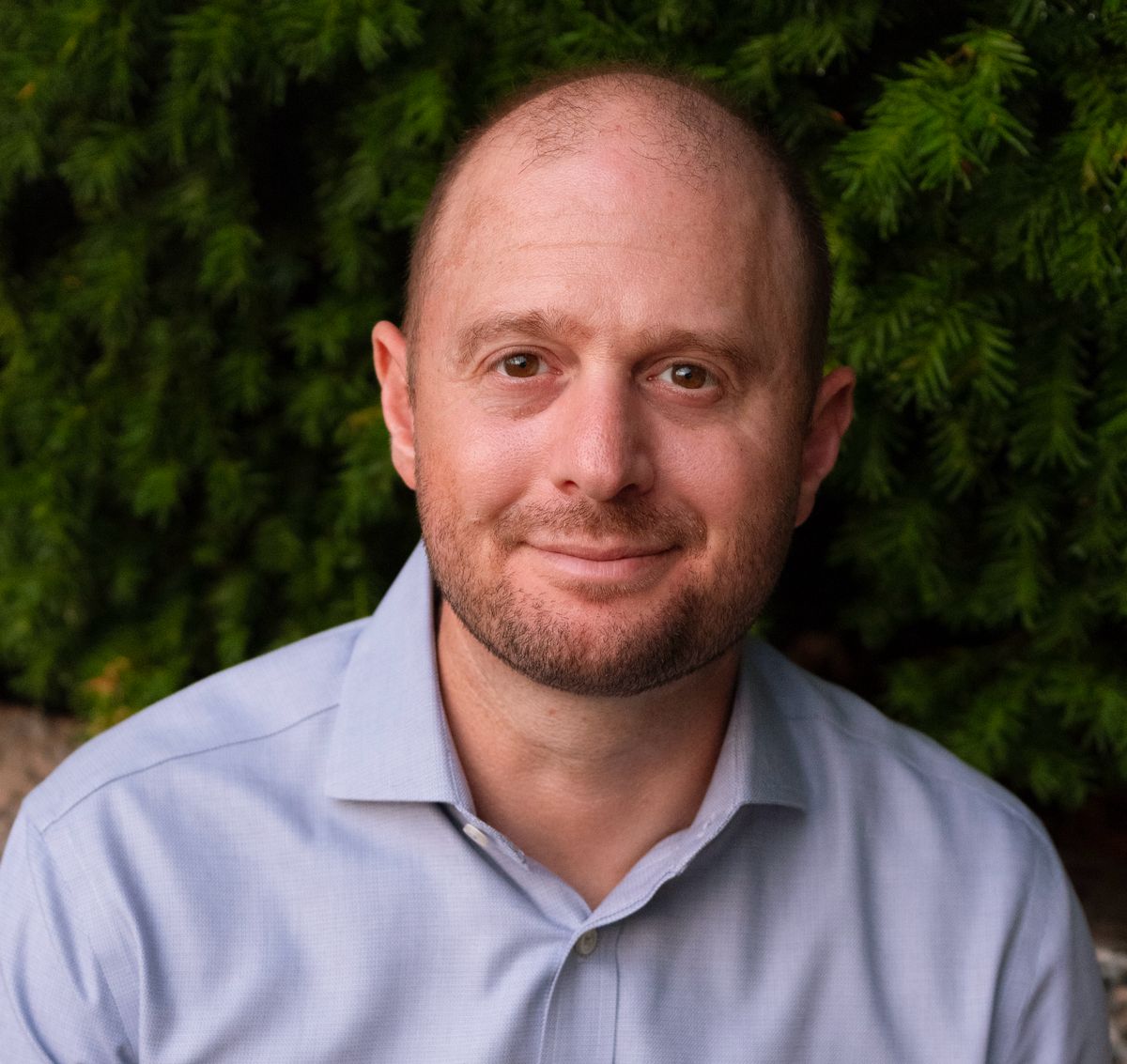
Cate Luzio is a force of nature.
For two decades, she mostly applied that force to banking. She held senior roles for HSBC and JPMorgan, working in London, Latin America and China. She served on boards for startups, non-profits and her alma mater, the University of Maryland.
Talking to her, she’s exactly what you’d expect from a senior banking executive. She talks quickly, confidently and doesn’t waste words or time.
“My friends would call me a tough-love person because I’m honest about it and own that part of me,” she says.
In 2018, she focused that ambition on building her own company, the professional education and networking company Luminary. She did it with her own money and got to work building a staff, a community and a business.
In 2022, she was diagnosed with cancer.
Almost immediately, she had to go from the person everyone relies upon to needing to rely on others. It was an uncomfortable transition.
Cate found out about her diagnosis right before a Zoom presentation with about 400 people. Her radiologist had called and shared the news. Cate didn’t blink. She took a few seconds to compose herself and went ahead with the presentation.
Her moment of change came later.
About five days after Cate’s surgery, she was speaking in Nashville, with ice packs under her arms to help with swelling and pain. The ice packs started leaking and she had to stop the speech and explain why.
“The overwhelming support in the room changed me,” she says. “A year later, I would have done it differently. Being a martyr isn’t always the right path.”

Courtesy of Cate Luzio
Cate was further pushed to change a year later when she had complications and needed a full hysterectomy. She needed a full six to eight weeks off. Instead of pushing back this time, Cate vowed not to come into the office or do a Zoom for that entire month, and to work at 50% until she recovered. Her team blossomed.
“It’s not about vulnerability. It’s about being honest. I don’t have to tell everyone about my health, but I do have to be honest about how they can support me,” she says.
Practical Advice
Career coaches say this is a common response for high-performing workers returning from cancer. They pretend the cancer never happened and step right back on the gas pedal as soon as they can.
Michele Woodward, a cancer survivor who is also one of the most sought-after executive coaches in Washington, D.C., would argue to fight that urge. She speaks from experience.
Michele had thyroid cancer in 2008 and learned the value of processing before speeding. There is a lesson to be learned from cancer. Running away can keep you from learning that lesson.
So, take time to grieve the healthy version of yourself and the reality of your prior career goals. Take time to evaluate your actual strength right now. Don’t sugarcoat it or dress it up in some way. Life will be harder after cancer. That doesn’t mean it will be worse.
Michele even has some clients write an obituary for the career they wanted to have. I’ve spoken with many cancer survivors who think of their careers before and after cancer as two separate books altogether. Not two chapters in the same book of their professional lives.
But you do have a superpower now. Clarity. Use that clarity to make more direct decisions and end wasted time. If you are doing something that doesn’t serve those ends, stop.
As you evaluate, don’t fall victim to a debilitating fatalism where you say to yourself: “I can’t dream.” Still dream, even if it’s a different dream.
“Let’s say I worked on Wall Street and was a big hotshot. I got cancer and couldn’t work those 80-hour weeks anymore. I could spend the rest of my life with that boulder on my shoulder of what could have been. Or, I could become the best certified financial planner in the world,” says Michele.
Cate says she is still the same hard-charging executive, but she does delegate more these days and finds joy in it. She has also been surprised at her broader network of customers and partners, who she says have shown up in ways she never could have imagined.
She also has a stronger relationship with her partner, who has his own demanding job that he pushed aside to assist her in recovery and caregiving.
Her experience is a good reminder that your community and support network want to help you if you let them. You can fundamentally alter your relationships for the better on the other side of cancer.
Between the Lines
My email blew up this summer when researchers at the University of Florida (Go Gators!) showed that an experimental mRNA vaccine might be the key to creating a cancer cure. There’s a lot to process in the study, but basically, the study showed that pairing the vaccine with immunotherapies helped the body fight back against cancer in mice.
So what should a reasonable human think?
Right now, not much. There are thousands of studies published every year that show something working in mice or rats or a petri dish that never actually materializes into lifesaving treatment.
That said, I’ve spent the last year speaking with dozens of researchers engaging in studies looking to fight cancer. And every time I get off the phone, I’m jazzed. New treatments that are proven sprout up nearly every week, all speaking to a broad and incredibly exciting fact: The odds of survival are rising.