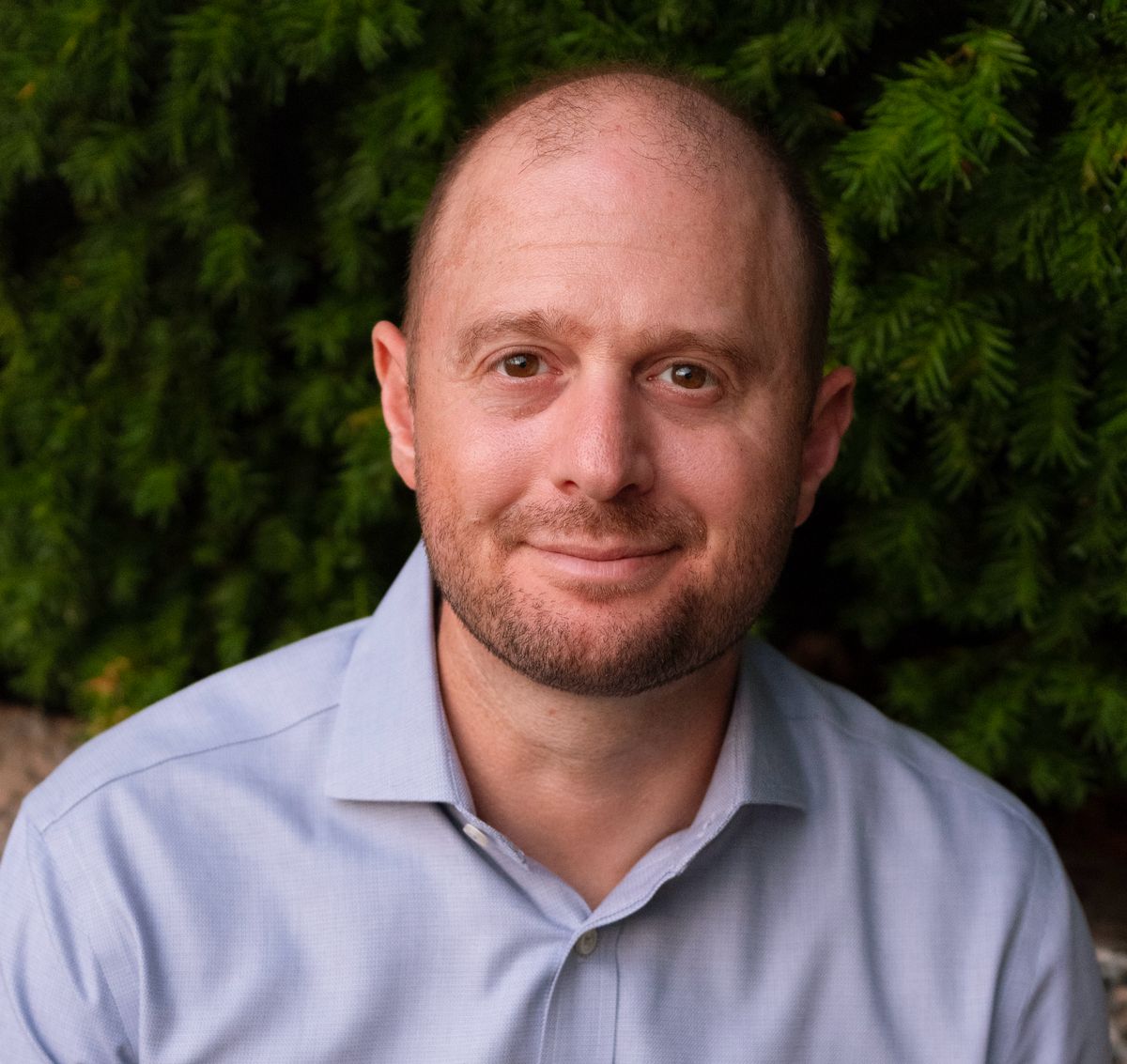
Adrian Franco has spent 2,000 hours of his life in a hospital room because of cancer.
He moved houses, cancel work commitments, and lost thousands in savings. And he had no time to prepare for any of it. His life was going perfectly normal until the minute his son was diagnosed with Ewing Sarcoma in a quiet hospital room in New York City at 2 am in August 2022.
“We were a happy family on the beach one day and then there was a tsunami,” says Adrian.
Not surprisingly, Adrian’s experience has changed him in myriad ways. He’s more circumspect and present with his family. He’s more direct with his time. I spent a few hours with Adrian late last year at his office just a few miles from my house in Jersey City, N.J. and his warmth is palpable.
Adrian has also found a new life purpose based on his experience and his unique set of skills. Adrian is a star in the somewhat nerdy financial education world (one of my favorite worlds). He has a masters and Ph.D. from Columbia University and spent years working on various economic, education and financial programs at the New York Federal Reserve and in the Mexican government.
He has spent his two-decade career focused on financial mobility, finding people who are being left behind by the financial ecosystem of our society and then hunted for ways to help.
The families of cancer survivors are among the most left behind, particularly young cancer survivors. Adrian saw this repeatedly with his own eyes in hospital rooms and doctor’s offices. It is inspiring him to act.
“The financial shock is overwhelming. I talked to so many others and the anecdotes broke my heart,” he says.

BrokenNotbroke
After being exposed to so many financial burdens – from medical costs to housing to transportation to lost income – Adrian spent hours studying this phenomenon. His work adds to the long list of amazing work being done by researchers on financial toxicity, the broader term for the unique financial burden caused by cancer.
In examining the phenomenon, Adrian soon realized the best way to help was not to add to the research, but to build something truly needed.
“Social workers kept telling me that they spent 50% of their time investigating how to help people with money. So I thought, ‘can we do that for them?’” says Adrian.
BrokenNotbroke is his attempt to do just that. The site is a unique database that connects the families of young cancer patients with the direct financial resources they need. Families provide their location, their cancer type, and the support they need. From there, the website connects these families directly with the group most likely to help.
Sometimes, that’s large national organizations offering lower cost drugs or housing. Other times, it’s a small local group that can provide free rides. Today, there are more than 450 organizations across the country included in the database with thousands of people using the service each year.
Adrian has been able to do this work as part of his current job, executive director of the Guarini Institute at New Jersey City University. The institute studies economic mobility and looks to help underserved communities. He says it wasn’t a hard pitch to get the Guarini family behind his endeavor.
“There is just so much fragmentation. The idea was to help by making it so much simpler,” he says. “If it’s 2 am and you can’t sleep because your kid has cancer and you can’t pay the utility bill. I want to solve for that.”
Expansion
This upcoming year will be a big one for the group. After spending the last two years building, they are now set for expansion.
Up first, the Institute has launched a bimonthly podcast, The brokenNotbroke Interview, for families navigating the financial and day-to-day challenges of pediatric cancer. Available on YouTube and Spotify, it features CEOs, founders, and board members of organizations nationwide sharing practical, trustworthy resources on financial assistance and other forms of support.
BrokenNotbroke also wants to expand resources further for survivors. There are financial hardships that come five and ten years after treatment – from the need for more schooling to improving financial access to new treatments. Adrian and his team are hoping to add more of these resources to the program.
He’s also hoping to replicate the endeavor in many other countries. One of Adrian’s students has already started a program in the Dominican Republic with discussions ongoing with other locations.
Between the Lines
Speak up. Advocate. Listen to your body.
These three pieces of advice can’t be repeated enough. They are applicable if you’re in treatment, out of treatment, or seemingly healthy.
My friend and former colleague Jessica Toonkel is in remission today because she followed those steps. Her latest essay in The Wall Street Journal serves as a poignant and practical guide for anyone trying to figure out when to speak up and when to listen. Please read it.