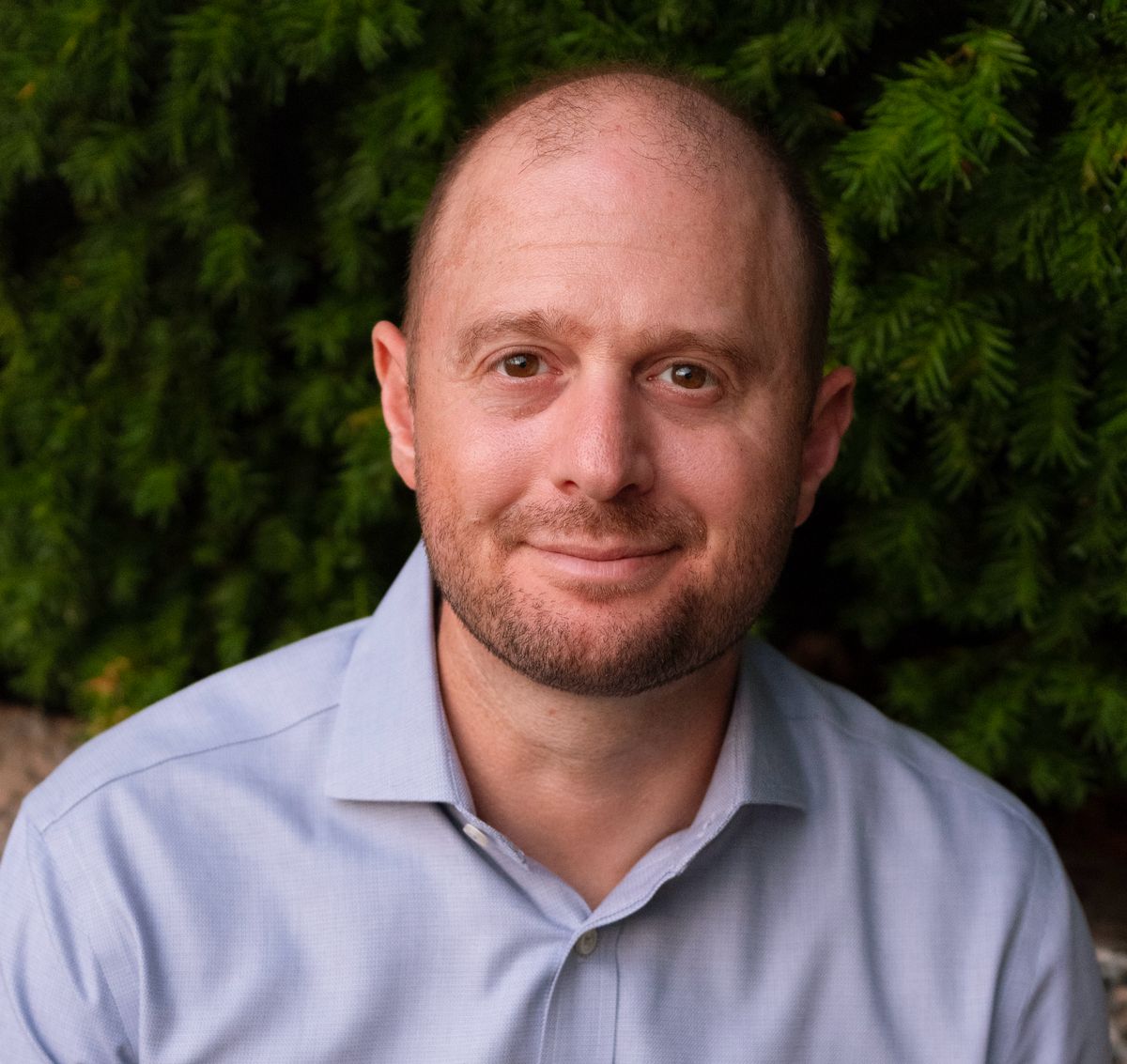
When you’re in treatment, there’s an instinct to become hyper focused on what you’ll do when the treatment is over and you are in remission.
For Troy Anderson, that’s never going to happen.
The 49-year old high-school cross-country coach and tech worker was diagnosed with follicular lymphoma right before Covid struck in late 2019. He had multiple setbacks in the months that followed before a clinical trial with an immunotherapy drug called Monjuvi provided a real response.
“But with follicular lymphoma, it’s never gone. They still see spots and I’m never cancer free,” says Troy.
In some ways, Troy says his knowledge that he was never going to be cured has altered his mental state for the better. And the details of how that happened are potentially helpful for all survivors.
Because he wasn’t hyperfocused on a finish line, Troy was thinking about life after treatment – well, life after acute treatment – right at the start. He pushed his care team on day one to find a non-chemo treatment so he could remain active during and after his therapy.
Today, Troy’s happy that he did as that mindset enabled him to reenter an active lifestyle quickly, right after the worst of treatment was over. He is now back running, hiking, and mountain biking, just like before his diagnosis.
In a few months from now, he’s cycling 191 miles from Seattle to Vancouver.

Troy and Jody biking in Seattle
What Helps
Throughout the acute phase of his treatment, Troy says there was a huge up and down in his physical health. There were days and even weeks he was minimally active. But he still used short activities, like walking, as a way of checking in on himself.
He has the same mindset now as he sets much more ambitious targets.
Troy says he pushes himself hard with workouts now, less because of thrill seeking, but more with a purpose. His workouts serve as a personal check in for his overall health. While he’s raising the bar on his activity, he aims to never push so hard that he can’t ask himself: ‘How am I feeling? Is there anything going on that I need to tell my doctor about?’
They also help mentally. Given he can never put cancer fully in the rear-view mirror, he knows there is no quick fix out there. The key is putting one foot in front of the other and stacking physical work consistently.
“Working out has taken on a whole different meaning for me. Even if it’s not a lot, that stacking effect builds your body and mind,” he says.
This hyper connection between mind and body is also changing him as a coach. He says he used to be very physical-focused in his coaching. Now, he sees much more of the mental side.
“It’s so interconnected. You’ve got to take care of everything,” he says.
Where He Still Needs Work
The one big side effect of his strategy to keep moving and keep active is that it can feel like a treadmill sometimes. Like he’s moving just to avoid the anxiety and fear of what happens if the lymphoma comes back.
This is particularly tough during his busy season in the spring and fall when he’s coaching. Those are busy days and he just doesn’t have the brain space to slow down and check in.
“My brain is constantly in problem solving mode and I just have to really work to slow that down and find ways to live with uncomfortable feelings, like the anxiety of what if my lymphoma comes back,” he says.
The calendar helps him slow down. He always stops and reevaluates at the end of the season, at his birthday and then whenever he has a CT scan coming up. It’s more organic than a set plan.
He’d like to build something more regular as he’s seen the benefits of that type of strategic planning.
Overall, however, the moving plan is working. Troy and his wife Jody have embraced it together.
The couple were high-school sweethearts and have been married for 26 years. They’ve been through a lot together, including multiple cancer diagnosis in her family.
Today, they are cycling together and working out together. He said the workouts and his connection to Jody have him embracing long-term planning, something that seemed impossible a few years ago.
“Take retirement. I hadn’t thought about what retirement could look like up until the last year. And now I’m thinking about it a lot,” he says.
NCODA Time
NCODA, the global non-profit network that connects professionals in oncology development and advancement, had me on their podcast recently. The podcast is called the PQI pod and PQI stands for Positive Quality Interventions.
It was a perfect marriage of my project and their mission.
Listening back, I think my favorite part of our conversation was about the distinction between short-term purpose and long-term purpose. Long-term planning can be so overwhelming sometimes in survivorship that you can forget to do any purpose thinking whatsoever.
I believe that’s a mistake after talking with hundreds of survivors. Even little weekly goals can be a purpose and can set you up for better health.
