

Whatever keeps me alive. It’s a mantra I’ve heard from so many survivors.
For some, it means staying alive long enough for another treatment to emerge. A friend of mine has now been told at three different times that she was getting the last possible treatment option for her cancer only for her to live long enough each time for scientists to discover another option.
For others, it means turning over every possible rock to find a solution to their cancer.
There are genetic answers. There is Eastern and Western medicine. There are possible answers in our cells and in our environment. There are answers everywhere.
One answer that has come up repeatedly from survivors looking to stave off recurrence is in the natural world. The thinking is spurred in part thanks to the work of Dr. Mirko Beljanski, a molecular biologist in Paris who examined whether natural compounds can protect against cancer. Dr. Beljanski died in 1998 but his daughter continues his work today by gathering scientists and funding research.
I spent some time with his daughter last month – both in interviews and a podcast – and the group’s research is vast. At its heart, the group believes plant extracts can destroy cancer stem cells. They have wrapped studies on breast cancer cells, thyroid cancer, pancreatic cancer and others.
An in vitro study showed flavopereirine (a bark found in trees) limited the markers on breast cancer cells, for example. According to this study, this plant extract can destroy 96% of cancer stem cells, says Sylvie Beljanski, a lawyer turned health advocate who leads the Beljanski Foundation.
Now, research is the purpose of the foundation she is leading, though she admits more is needed. A new study on prostate cancer stem cells is already in the works at Kansas University Medical Center.
To Be Fair
Now, this newsletter is not an endorsement of the foundation’s research. I have neither the academic nor scientific credentials to back anyone’s research. Moreover, the foundation doesn’t yet have large, randomized clinical trials.
But I do think there are two lessons in Sylvie’s work for survivors. One is that science itself is always changing and I’m curious to see what else her group’s research will uncover in coming years.
The other lesson is to always ask questions as it can help you get comfortable with your path, says Sylvie.
“Treatment is a decision for each person to make. It is important to be comfortable with the treatment you choose,” she says.
Most of us do this with our doctors during treatment. We ask why a particular treatment has been chosen or simply go get a second or third opinion because we want to examine every angle.
I think we need to ask more. We have to have the same curiosity about the totality of our treatment – from the treatment of cancer to the overall health of our bodies and minds.
Early in this newsletter, I wrote about the world of biohacking, the practice of using DNA sequencing and other science to then alter your dietary patterns, physical activity, and other factors to live healthier.
Some readers emailed me with tales of recovery. A doctor in Florida connected me with one of his patients who said she had used biohacking to cure her cancer. Some doctors emailed me to say I was promoting something that shouldn’t be promoted.
As a journalist, I’m lucky. The only thing I actually endorse is an approach. You have to ask hard questions of everyone and you have to challenge the norm at times. Some of the world’s greatest scientists are making strides because of this approach and you should do the same as a patient and advocate for yourself.
The Podcast
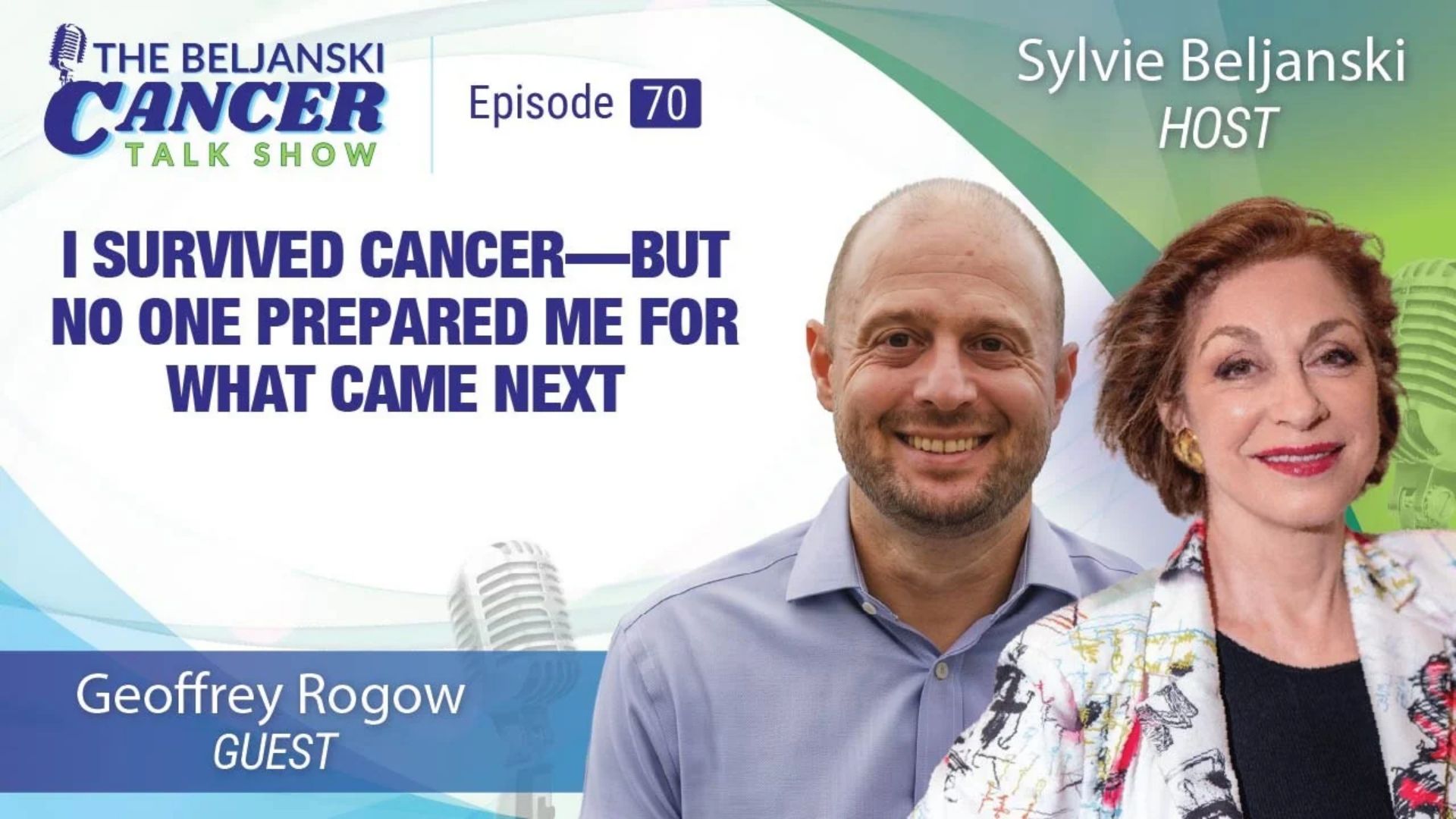
Outside of our chat, I also joined Sylvie on an episode of The Beljanski Cancer Talk Show. We talked about physical and emotional changes, as well as many of the career, financial, family, and relationship challenges so many survivors have laid out over the last two years in interviews.
One of my favorite parts of the conversation was about moving on.
So many survivors become obsessed with trying to figure out why cancer happened to them. Was it karma? Or their environment or genes?
This obsession, in many cases, can hold you back from moving on. Some obsession is good, too much is not.